Subramania Bharati
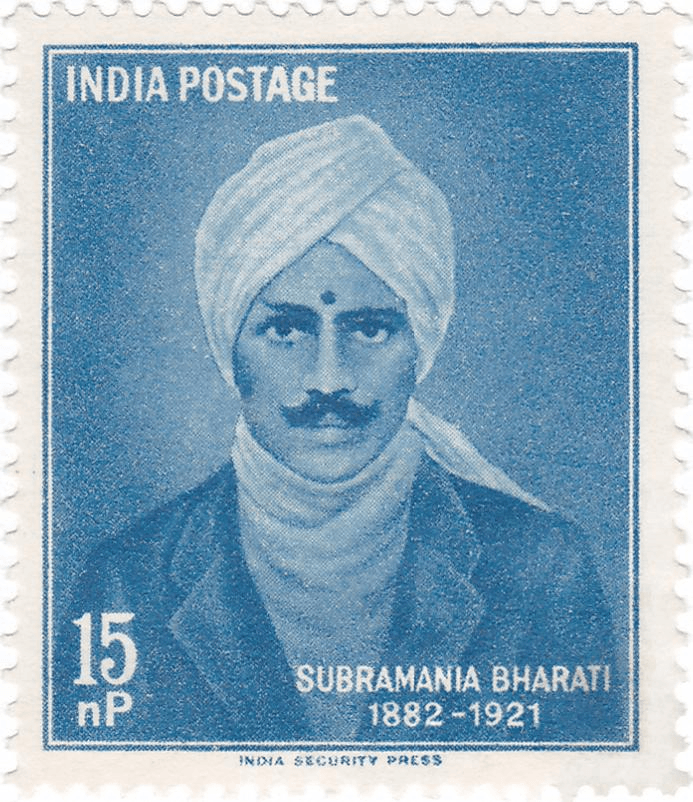
Subramania Bharati (1882 – 1921) was an Indian Tamil poet, journalist, and independence activist whose works redefined Tamil literature and nationalist thought. Revered as Mahakavi Bharati (“Great Poet Bharati”), he championed freedom, equality, and women’s rights through powerful, modern verse that continues to inspire generations.
Key facts
- Full name: Chinnaswami Subramania Bharati
- Born: December 11, 1882 – Ettayapuram, Madras Presidency, India
- Died: September 11, 1921 – Madras (now Chennai), India
- Major works: Panchali Sapatham, Kannan Pattu, Kuyil Pattu
- Known for: Modern Tamil poetry and social reform
Early life and education
Born to Chinnaswami Subramania Iyer and Lakshmi Ammal, Bharati displayed literary talent from childhood and was given the title “Bharati” at age 11 by the Raja of Ettayapuram for his poetic skill. He studied in Tirunelveli and Varanasi, where he absorbed Hindu philosophy and nationalist ideas that shaped his later writings.
Role in nationalism
As a journalist for Swadesamitran and editor of his own publications India and Bala Bharatham, Bharati voiced India’s freedom struggle with clarity and fervor. His support for Bal Gangadhar Tilak and armed resistance to British rule forced him into exile in French Pondicherry (1910–1919), where he produced his most influential patriotic poems and essays.
Literary and social reform vision
Bharati transformed Tamil poetry through free verse and vernacular vigor, introducing themes of nationalism, gender equality, and universal brotherhood. He denounced caste discrimination and child marriage, performed a sacred thread ceremony for a Dalit to assert equality, and envisioned a society where men and women were equals. Poems such as Pudhumai Penn (Modern Woman) and Viduthalai (Freedom) embodied his reformist spirit.
Legacy and influence
Despite dying young after an accident in Madras, Bharati’s impact on Indian literature and social thought endures. Institutions like Bharathiar University and the Subramanyam Bharati Award honor his legacy. Statues stand at Marina Beach and the Indian Parliament, and his verses remain a cornerstone of Tamil education and music. Leaders such as Narendra Modi continue to cite Bharati as a symbol of courage and cultural awakening.
Bharat Our Motherland
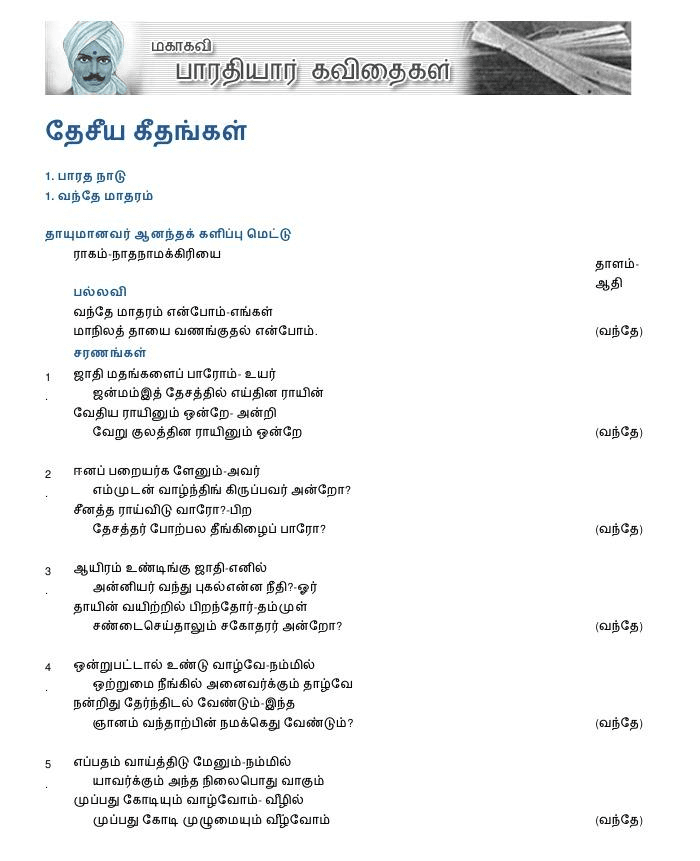
“Bharat Our Motherland” is a patriotic poem by Indian nationalist poet Subramania Bharati, originally written in Tamil and later translated into English. The poem celebrates India—referred to as Bharat Mata—as a divine mother, embodying the nation’s unity, spiritual richness, and resilience during the struggle for independence.
Key facts
- Original language: Tamil
- English title: Bharat Our Motherland
- Author: Subramania Bharati
- Theme: Patriotism, unity, reverence for India as mother
- Era: Early 20th century (Indian independence movement)
Historical context
Written during the height of India’s nationalist awakening, the poem reflects Bharati’s vision of a free and awakened nation. He personifies India as a nurturing mother whose glory is eternal despite colonial subjugation. The work aligns with his broader corpus that merged spiritual fervor with calls for social reform and political liberation.
Themes and imagery
The poem employs vivid imagery of nature, faith, and maternal love to symbolize India’s sacred geography and moral strength. Bharati’s language fuses devotion and defiance, urging unity across regions and castes. His portrayal of the land as a goddess invites emotional patriotism rooted in cultural identity and universal compassion.
Literary significance
“Bharat Our Motherland” stands as a hallmark of Bharati’s lyrical nationalism. It contributed to Tamil and Indian literature by bridging classical poetic traditions with modern political ideals. Its translations have made it an enduring anthem of cultural pride, reflecting the synthesis of artistic expression and the quest for national freedom.
End …