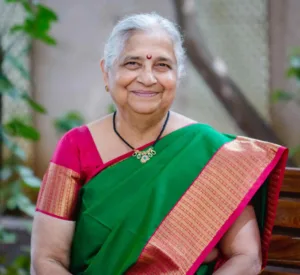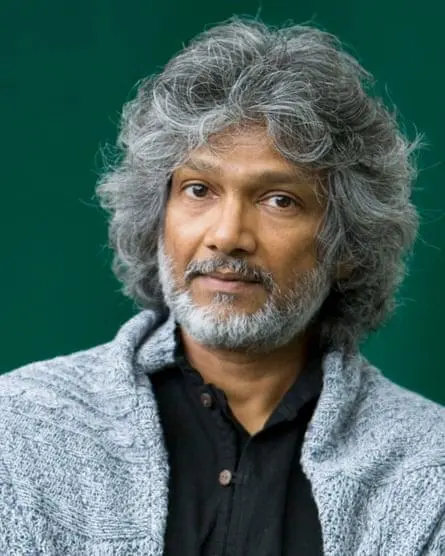
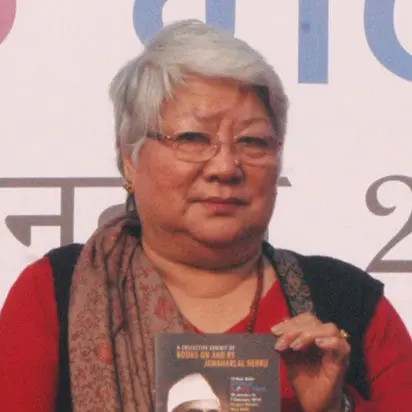
Dr Temsüla Ao
Temsula Ao (1945–2022) was a Naga poet, short story writer, and ethnographer from India. Writing primarily in English, she became one of the most important literary voices to emerge from Nagaland, articulating the cultural memory, trauma, and resilience of the Naga people through poetry, fiction, and ethnographic study.
Key facts
- Born: October 1945, Jorhat, Assam, India
- Died: October 2022, Nagaland (aged 77)
- Occupation: Poet, short story writer, ethnographer, professor
- Major honors: Padma Shri (2007); Sahitya Akademi Award (2013)
- Notable works: Laburnum for My Head; These Hills Called Home; Ao-Naga Oral Tradition
Early Life and Education
Temsüla Ao was born on October 25, 1945, in Jorhat, Assam, to Imnamütongba Changkiri and Nokintemla Longkumer. She faced early tragedy when both her parents died within nine months, leaving her and her five siblings orphaned. Her formative years were spent partly in Jorhat and partly in her ancestral village, Changki, in Mokokchung district, Nagaland, which deeply influenced her sense of identity and connection to Ao Naga culture. She studied at Golaghat Girls’ Mission and later completed her matriculation in Assamese, earning her Bachelor’s degree from Fazl Ali College in Mokokchung, a Master’s in English from Gauhati University, and a Ph.D. from North Eastern Hill University (NEHU) in Shillong
Academic and Professional Career
Ao joined NEHU in 1975 as a lecturer and retired in 2010 as a Professor of English and Dean of the School of Humanities and Education. She served as Director of the North East Zone Cultural Centre from 1992 to 1997 and was a Fulbright Fellow at the University of Minnesota (1985–1986), where her engagement with Native American communities inspired her to document the oral traditions of the Ao Nagas. Her academic work cantered on folklore, oral tradition, and the preservation of Ao Naga cultural heritage.
She also chaired the Nagaland State Commission for Women from 2012 to 2019, reflecting her commitment to social justice and women’s rights.
Literary themes and style
Ao’s writing draws deeply from the oral traditions of the Ao Naga community. Her poetry collections, all carrying “Songs” in their titles, include Songs that Tell (1988), Songs that Try to Say (1992), Songs of Many Moods (1995), Songs from Here and There (2003), Songs from the Other Life (2007), and Songs along the Way Home (2019), later compiled into Book of Songs: Collected Poems 1988–2007 (2013).
Her fiction, notably These Hills Called Home: Stories from a War Zone (2006) and Flattrack Bullies (2005), portrays the violence and dislocation of Naga insurgency through the eyes of ordinary villagers, combining realism with spiritual reflection.
Her book Laburnum for My Head won the Sahitya Akademi Award for English writing in the short story category, and she was also honored with the Padma Shri for her contributions to literature and education
Ethnography and memoir
Her ethnographic work Ao-Naga Oral Tradition (1999) remains a foundational study of tribal folklore, law, and customs. In her memoir Once Upon a Life: Burnt Curry and Bloody Rags (2013), Ao chronicled a “fractured childhood” shaped by loss and hardship, reflecting her belief in endurance and divine mercy.
Legacy and influence
Through her literature and scholarship, Ao brought Naga experiences into Indian and global conversations on identity, post-coloniality, and indigenous sovereignty. Critics view her work as both a personal act of testimony and a broader cultural archive preserving the “song and soul” of Nagaland.
Awards
- In 2007, Dr Temsula Ao received the Padma Shri Award for Literature and Education. She was a recipient of the Nagaland Governor’s Award for Distinction in Literature
- In 2009, she received the Governor’s Gold Medal from the Meghalaya Government.
- In 2013, she was awarded the Sahitya Akademi Award for her Short Story collection ‘Laburnum for My Head’.
- In 2015, she was the recipient of the Kusumagraj National Literature Award for poetry.