

Understanding the Weather notes for Class 7 NCERT Social Science are explained in simple language. This post gives chapter summary, key points, and exam questions from the book Exploring Society Part 1. Students can learn about weather elements, instruments, and prediction for easy revision and better marks.
- ▶ 1 Summary and Glossary for Chapter 2, “Understanding the Weather,” from NCERT Class 7
- 2 Chapter-notes: Based on the Class 7 NCERT Social Science Book, Chapter 2, ‘Understanding the Weather’.
- ▶ 3 Weather and its Elements
- 3.1 Weather
- 3.2 Observing Nature’s clues
- ▶ 4 Weather Instruments
- 4.1 a) Temperature
- 4.2 b) Precipitation
- 4.3 c) Atmospheric Pressure
- 4.4 d) Wind
- 4.5 e) Humidity
- 5 Weather Stations
- 6 Predicting the Weather
- 7 Revision Key Points
- ↑ Back to top
Summary and Glossary for Chapter 2, “Understanding the Weather,” from NCERT Class 7
Introduction
In this chapter, students learn about weather and its changes. They understand what weather is, what elements make up the weather, how weather is measured using instruments, and how scientists predict weather. The chapter also explains why weather prediction is important in our daily life and how it helps us stay safe.
Summary
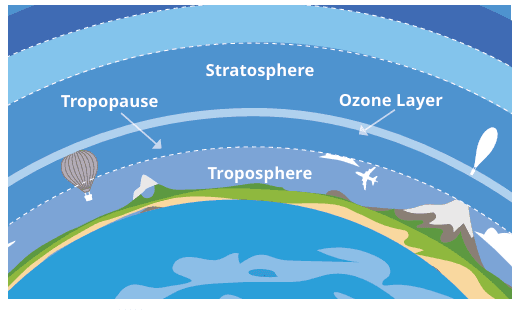
Weather is the condition of the Earth’s atmosphere at a particular place and time. It is felt as hot, cold, rainy, windy, or humid. All weather changes take place in the troposphere, the lowest layer of the atmosphere where we live.
Weather is defined by five main elements: temperature, precipitation, atmospheric pressure, wind, and humidity. These elements work together to decide the weather of a place. Each element is measured using special instruments such as thermometers, rain gauges, barometers, anemometers, wind vanes, and hygrometers.
A weather station brings all these instruments together and records data at regular intervals. Automated Weather Stations (AWS) use sensors to collect weather information without human help. Meteorologists study this data and use scientific methods to predict the weather.
Weather prediction is very important today because climate change has increased extreme events like floods, droughts, cyclones, and heat waves. Accurate forecasts help people and governments prepare in advance and reduce loss of life and property. Weather changes daily and is closely linked to climate, which changes over a long period of time.
- Atmosphere
The layer of gases (air) that surrounds the Earth. - Troposphere
The lowest layer of the atmosphere where all weather changes take place and where we live and breathe. - Temperature
The measure of how hot or cold the air is. - Precipitation
Any form of water that falls from the sky, such as rain, snow, sleet, or hail. - Water Vapour
Water present in the air in gaseous form. - Sleet
Frozen or partly frozen rain. - Hail
Small, hard balls of ice that fall from the sky like rain. - Atmospheric Pressure
The weight of air pressing down on the Earth’s surface. - Wind
The movement of air from high-pressure areas to low-pressure areas. - Humidity
The amount of water vapour present in the air. - Ambient
Related to the immediate surroundings. - Statistics
The method of collecting and analysing data to understand patterns or make predictions. - Meteorology
The scientific study of weather and its changes. - Forecast
To predict the weather in advance. - Barometer
An instrument used to measure atmospheric pressure. - Millibar (mb)
The unit used to measure atmospheric pressure. - Anemometer
An instrument used to measure wind speed. - Wind Vane
An instrument used to find wind direction. - Rain Gauge
An instrument used to measure rainfall in millimetres. - Hygrometer
An instrument used to measure humidity. - Relative Humidity
The amount of water vapour in the air measured as a percentage (%). - Acclimatise
To adjust the body to a new climate or height. - Depression (Low-Pressure System)
An area of very low air pressure that can cause storms or cyclones. - Loo
A strong, hot, and dusty wind that blows in north India during summer.
Chapter-notes: Based on the Class 7 NCERT Social Science Book, Chapter 2, ‘Understanding the Weather’.
Student-Note:
These chapter-notes are based on and follow the content and structure of Class 7 NCERT Social Science, Chapter 2, ‘Understanding the Weather.’ They help students stay aligned with the NCERT syllabus and prepare effectively for both understanding the concepts and performing well in exams. #SirjiNotesC7
CHAPTER-NOTES
Weather and its Elements
Weather
Weather in Our Daily Life
- On a cold winter morning, we feel cold and wear thick clothes.
- On a hot summer day, we wear light and cool clothes.
- Our body feels changes around us.
- This change we feel is called weather.
What is Weather?
- Weather means the condition of the atmosphere
at a particular place and at a particular time. - Example: hot, cold, rainy, windy, cloudy, etc.
What is Atmosphere?
- The atmosphere is the layer of gases (air) around the Earth.
- It protects life and helps us breathe.
- The atmosphere has many layers, like a layered cake.
Troposphere
- The lowest layer of the atmosphere is called the troposphere.
- All humans, animals, and plants live in this layer.
- All weather changes happen here.
- Height:
- About 6–18 km above the Earth.
- Thicker near the Equator (hot areas).
- Thinner near the poles (cold areas).
Words Used for Weather
We describe weather using words like:
- Hot
- Cold
- Rainy
- Cloudy
- Humid
- Snowy
- Windy
These words tell us how the weather feels.
Elements of Weather
Weather is made up of five main elements:
- Temperature: Tells how hot or cold the air is.
- Precipitation
- Water that falls from the sky.
- Example: rain, snow, sleet, hail
- Atmospheric Pressure: The weight of air pressing down on the Earth.
- Wind
- The movement of air.
- Includes speed and direction.
- Humidity: The amount of water vapour in the air.
Why Do We Need to Measure Weather?
- People feel cold or hot differently in different places.
- What feels cold in Chennai may feel normal in Kashmir.
- So, we need common measurements.
- Measuring weather helps everyone understand and compare.
Traditional Ways of Predicting Weather
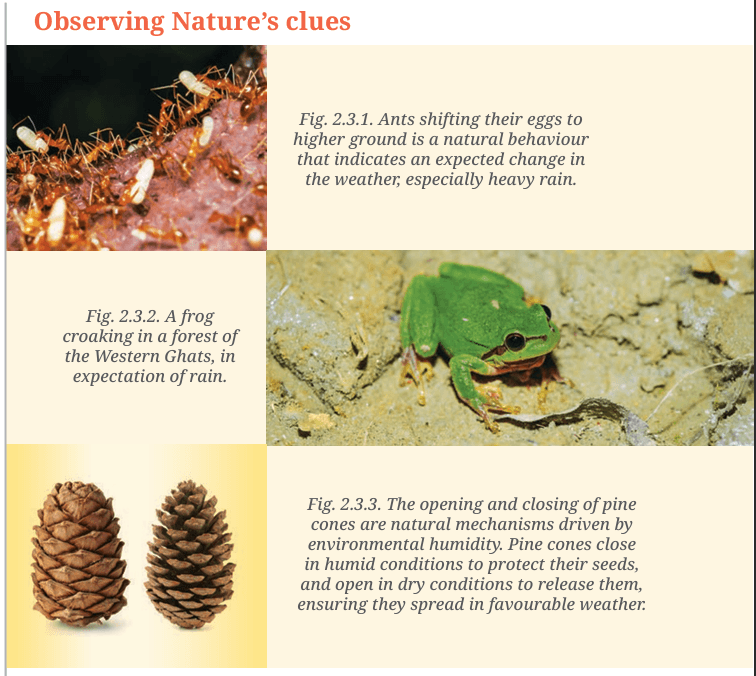
From early times, people observed nature to know the weather:
- Birds flying low
- Ants carrying eggs
- Frogs croaking loudly
- Pine cones opening and closing
- This knowledge was passed from elders to children.
- Even today, many people use these signs to predict the monsoon.
Observing Nature’s clues
Modern Weather Prediction
- Scientists now use instruments and technology.
- They measure weather accurately.
- Meteorologists study this data.
- They can predict weather:
- A few hours ahead
- A few days ahead
- Even weeks ahead
Summary of Notes
Short Summary (for quick revision)
- Weather is the condition of the atmosphere at a place and time.
- The troposphere is where all weather changes happen.
- Weather has five elements: temperature, rainfall, pressure, wind, and humidity.
- Earlier, people used nature’s signs to predict weather.
- Today, scientists use instruments for accurate weather prediction.
Weather Instruments
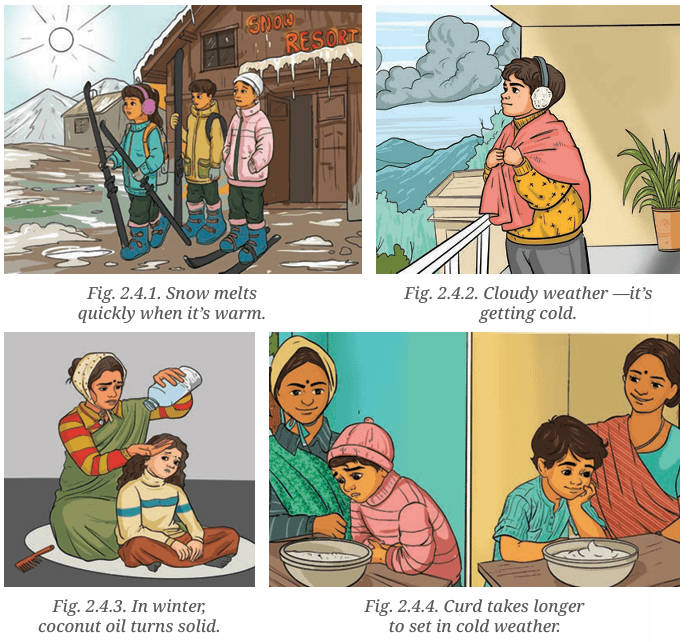
Weather instruments help us measure different elements of weather correctly. These measurements help scientists study, compare, and predict weather.
a) Temperature
What is temperature?
- Temperature tells us how hot or cold the air is.
Instrument used: Thermometer
Types of thermometers
- Some thermometers measure the ambient (surrounding) temperature.
- Some record the maximum and minimum temperature of the day.
- Earlier thermometers used coloured liquid that expands on heating.
- Today, digital thermometers are mostly used because:
- They are more accurate.
- They can store more data.
Uses of temperature data
Temperature readings help us calculate:
- Range of temperature
- Difference between maximum and minimum temperature in a day
- Formula:
Range = Maximum temperature − Minimum temperature
- Mean daily temperature
- Average temperature of the day
- Formula:
(Maximum + Minimum) ÷ 2
Don’t Miss Out
- The India Meteorological Department (IMD) was set up in 1875.
- Its motto means:
“From the sun comes rain; from rain comes food; from food comes life.” - The sun causes heating, evaporation, clouds, and finally rain.
b) Precipitation
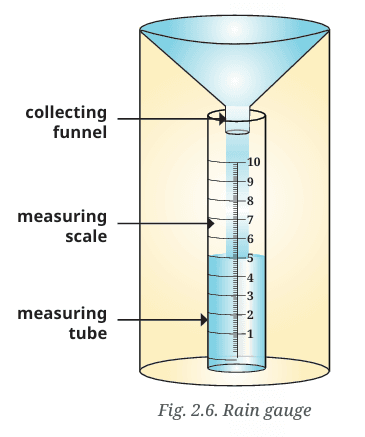
What is precipitation?
Any form of water falling from the sky. Example: rain, snow, sleet, hail
Instrument used: Rain Gauge
How rainfall is measured
- Rain falls into a funnel.
- Water collects in a cylinder.
- A scale measures the depth of water.
- Rainfall is measured in millimetres (mm).
Example
- If collected water is 5 mm high, rainfall is 5 mm.
- If news says 30 mm rainfall, it means 30 mm of rainwater was collected.
c) Atmospheric Pressure
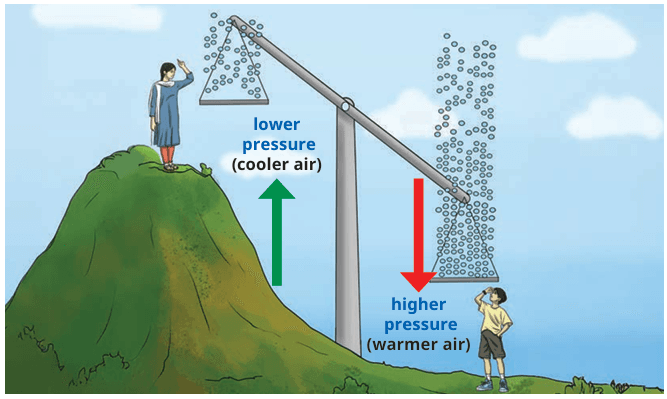
What is atmospheric pressure?
It is the pressure caused by the weight of air around us.
Daily experience
- Before a storm, weather may feel heavy.
- This happens due to change in air pressure.
Pressure and height
- Higher pressure near sea level.
- Lower pressure in mountains.
- At high altitudes:
- Air is thin.
- Oxygen is less.
- People may feel breathless, tired, or dizzy.
Low-pressure system
- Sometimes pressure drops suddenly.
- This is called a depression.
- It may lead to storms or cyclones.
Instrument used: Barometer
Unit of measurement: Millibar (mb)
- Normal pressure at sea level: 1013 mb
- Pressure below 1000 mb shows a depression
High-altitude example
- Places like Khardung La (Ladakh) have very low pressure.
- Army personnel must acclimatise to survive there.
d) Wind
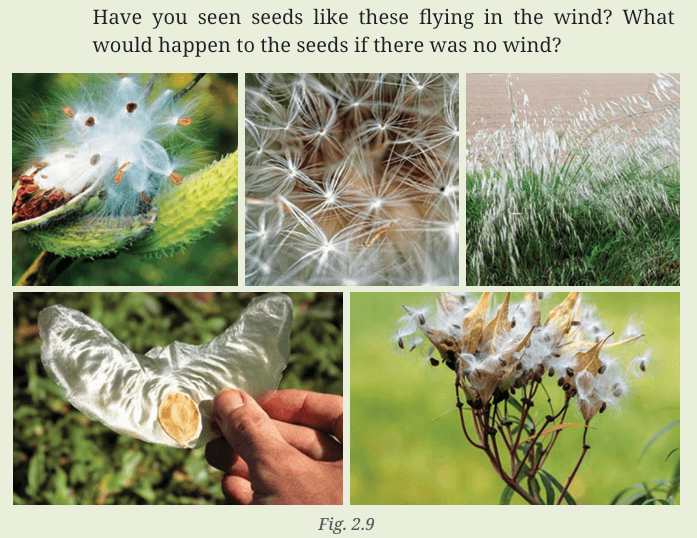
What is wind?
Wind is the movement of air from High pressure → Low pressure
Two main features of wind: Speed and Direction
Why wind is important
- Helps in weather forecasting
- Important for:
- Pilots (flying)
- Sailors (sailing)
- Farmers (rain prediction)
- Strong wind dries soil faster
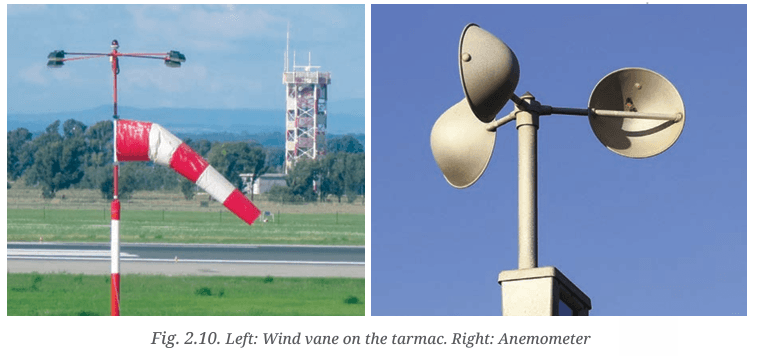
Instruments used
- Wind vane / Weather vane
- Shows wind direction
- Pointer moves in direction of wind
- Wind sock is a type used at airports
- Anemometer
- Measures wind speed
- Has rotating cups
- Faster wind → faster rotation
- Speed measured in km/h
e) Humidity
What is humidity?
- Amount of water vapour present in the air.
Factors affecting humidity
- Temperature
- Wind
- Pressure
- Location (near sea or land)
Evaporation and humidity
- Evaporation causes cooling
- High humidity → slow evaporation
- That is why clothes dry slowly on rainy days
Relative Humidity
- Measured in percentage (%)
- 0% → No water vapour (not possible naturally)
- 100% → Air fully filled with water vapour
Humidity ranges
- Dry weather: 20% – 40%
- Humid weather: 60% – 80%
Instrument used: Hygrometer
Why humidity measurement is important
- Used in food industries
- Museums control humidity to protect exhibits
Thinking point
- Clothes dry faster in lower humidity
- We sweat more in higher humidity
Summary of Notes
Short Summary (for revision)
- Weather instruments help us measure weather correctly.
- Thermometers measure temperature.
- Rain gauges measure rainfall.
- Barometers measure air pressure.
- Wind vanes and anemometers measure wind direction and speed.
- Hygrometers measure humidity.
- These measurements help in weather forecasting and safety.
Weather Stations
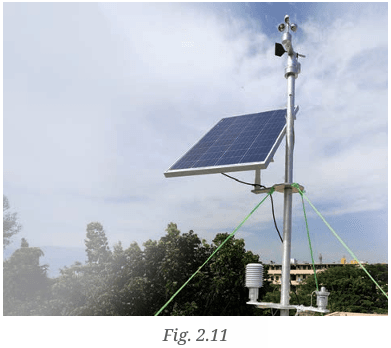
What is a Weather Station?
- To understand weather, we need to measure many elements together.
- A weather station is a place where all weather instruments are kept together.
- It helps to:
- Measure weather at a particular place and time
- Record weather data
- Track changes in weather
How Does a Weather Station Work?
- Instruments at a weather station measure:
- Temperature
- Rainfall
- Wind speed and direction
- Atmospheric pressure
- Humidity
- Readings are taken at regular time intervals.
- This data helps scientists to:
- Map the weather
- Predict future weather
Automated Weather Station (AWS)
What is an AWS?
- An Automated Weather Station (AWS) works on its own.
- It uses sensors instead of people.
- It measures and records data automatically.
What does an AWS measure?
- Temperature
- Humidity
- Wind speed and direction
- Rainfall (precipitation)
- Atmospheric pressure
Advantages of AWS
- Gives accurate information
- Works day and night
- Provides quick and timely data
- No human presence needed
Uses of Automated Weather Stations
AWS is used in many fields:
- Agriculture – helps farmers plan crops
- Aviation – helps pilots fly safely
- Navigation – helps ships and boats
- Environmental monitoring – studies nature and climate
Don’t Miss Out
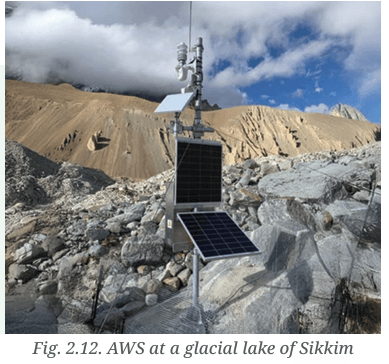
- In 2023, the National Disaster Management Authority (NDMA) set up an AWS:
- At a glacial lake in Sikkim
- At a height of more than 4800 metres
- This AWS helps in:
- Giving early warnings
- Preparing for dangerous weather conditions
Summary of Notes
Short Summary (for quick revision)
- A weather station has all instruments in one place.
- It records weather data at regular intervals.
- An Automated Weather Station (AWS) works automatically using sensors.
- AWS gives fast, accurate, and reliable weather information.
- Weather stations help in forecasting and disaster management.
Predicting the Weather
Who Predicts the Weather?
- Meteorologists are scientists who study the weather.
- They collect data from weather instruments and weather stations.
- Data is collected over a long period of time.
- They use scientific methods and computers to predict weather.
Why Is Weather Prediction Important Today?
- Climate change has made extreme weather more common.
- Examples of extreme weather:
- Droughts
- Floods
- Cyclones
- Heat waves
- Accurate prediction helps us prepare in advance.
How Weather Prediction Helps People
- People can stay safe.
- Governments can plan and act early.
- Examples:
- Fishermen are warned not to go to sea during storms.
- Coastal areas may be evacuated before a cyclone.
- Emergency services can be kept ready.
Weather Warning Maps
- Weather warnings are shown using maps and symbols.
- These maps show:
- Heat waves
- Heavy rain
- Storms
- Cyclones
- Different colours and icons show the level of danger:
- Watch (Be alert)
- Alert (Be prepared)
- Warning (Take action)
India Weather Map Example
- The map shown was issued by the India Meteorological Department.
- Date of issue: 19 May 2024
- It helps people understand:
- Which areas are in danger
- What type of weather is expected
- Which places are safe
Learning from the Map
By studying the map, students can:
- Identify different weather conditions
- Find states with warnings
- See areas with heat waves or heavy rain
- Understand how early warnings save lives
Summary of Notes
Short Summary (for quick revision)
- Meteorologists study weather data to predict future weather.
- Weather prediction is important due to climate change.
- Early warnings help people and governments prepare.
- Weather maps use symbols and colours to show danger levels.
- Accurate prediction helps reduce loss of life and property.
Revision Key Points
What Defines Weather?
- Weather at a place depends on five elements together:
- Temperature
- Humidity
- Precipitation (rain, snow, etc.)
- Wind
- Atmospheric pressure
- All these elements work together to decide the weather of a place.
Measuring the Weather
- Each element is measured using special instruments.
- These instruments give correct and scientific data.
- Collected data helps us to:
- Monitor weather changes
- Predict future weather
Dominant Weather Elements
- At different times, one element becomes more important than others.
Examples:
- July → Rainfall is most important
- May & December → Temperature is most important
- During cyclones → Atmospheric pressure becomes very important
- During loo or forest fires → Wind becomes very important
(Loo: hot, strong, dusty wind blowing in north India during summer)
Weather and Climate
- Weather changes daily.
- Climate changes over a long time.
- Weather and climate are closely connected.
- Climate will be studied in the next chapter.